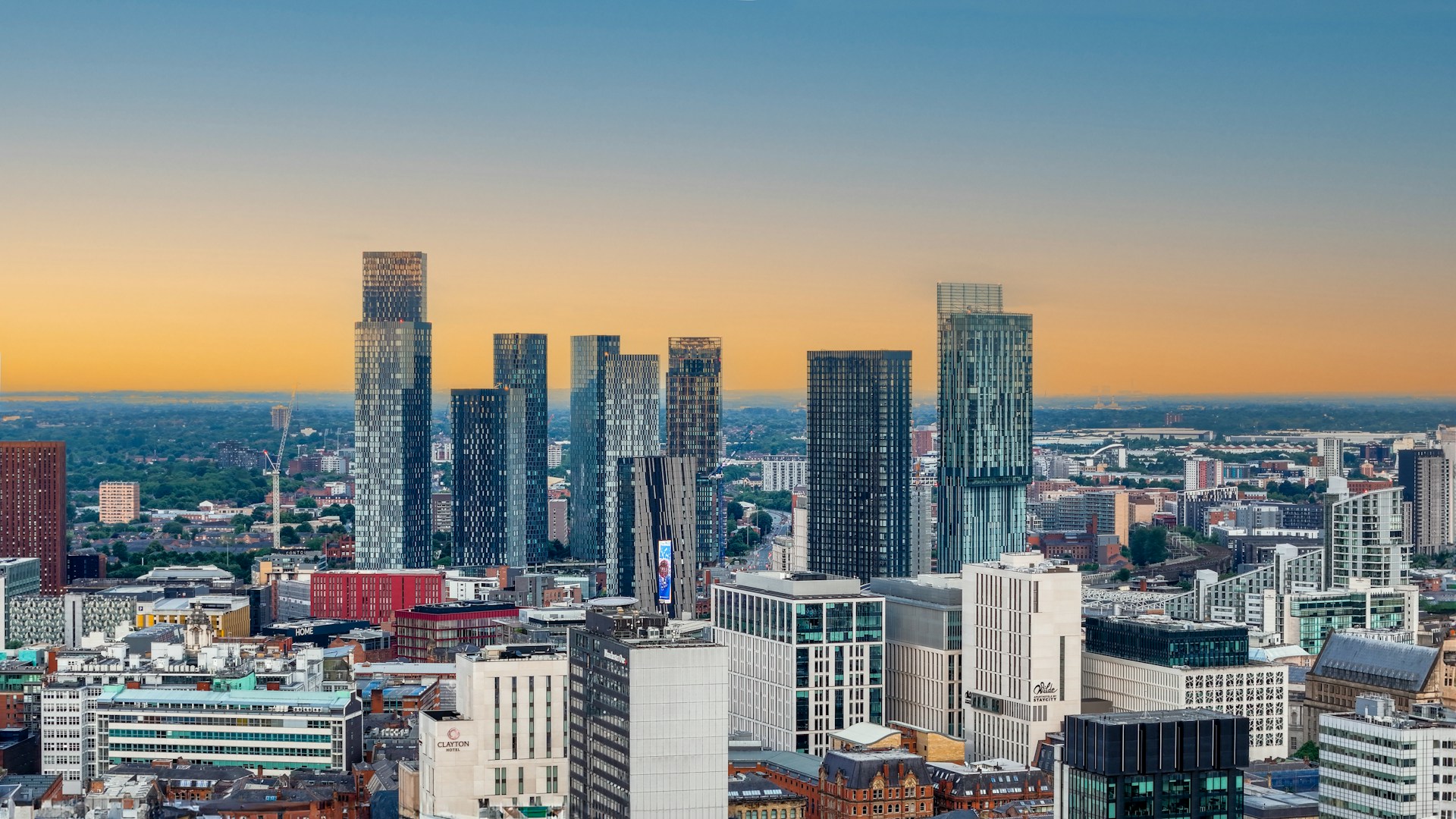
Manchester has firmly established itself as one of the UK’s strongest and most resilient buy‑to‑let markets, attracting both domestic and international investors seeking reliable rental income and long‑term capital growth. Over the past decade, the city has undergone a transformation driven by large‑scale regeneration, population growth and a thriving business ecosystem, all of which continue to fuel demand for high‑quality rental accommodation.
Recent data shows that Manchester remains one of the fastest‑growing cities in the UK. According to the Office for National Statistics, the population has increased by more than 10 per cent in the last ten years, with forecasts suggesting a further rise of 70,000 residents by 2035. This sustained growth has placed significant pressure on the rental market, where occupancy rates consistently exceed 95 per cent and rental prices have risen by more than 20 per cent since 2020.
A City Leading the UK’s Rental Growth
Manchester’s rental market continues to outperform national averages. Research from JLL reports that the city is expected to see rental growth of around 6 per cent per year between 2024 and 2027, driven by strong tenant demand and limited supply of new homes. The city’s young professional population, supported by major employers such as the BBC, Amazon, Siemens and a rapidly expanding tech sector, is a key driver of this demand.
For investors, this creates a compelling environment: high occupancy, rising rents and a consistent flow of new tenants entering the market each year.
Regeneration Powering Investment Confidence
Manchester’s £10bn+ regeneration pipeline continues to reshape the city and strengthen its investment appeal. Major schemes such as Victoria North, Mayfield, NOMA, Deansgate Square and the Oxford Road Corridor are delivering thousands of new homes, commercial spaces and public amenities.
These regeneration zones are attracting investor attention because they offer:
- Strong long‑term capital growth potential
- High tenant demand from young professionals
- Improved transport links and infrastructure
- Modern, high‑specification developments
Investors looking to explore regeneration‑led opportunities often focus on city‑centre apartments, where demand remains consistently high.
Key Developments Driving the Buy‑to‑Let Market
Several standout developments are shaping Manchester’s investment landscape in 2026:
- Deansgate Square – A landmark cluster of towers offering premium rental accommodation with exceptional amenities.
- Victoria Riverside (Victoria North) – Part of the city’s largest regeneration project, delivering thousands of new homes over the next decade.
- Circle Square – A thriving innovation district attracting tech professionals and students.
- Ancoats & New Islington – One of the UK’s most desirable neighbourhoods, known for its independent food scene and modern residential schemes.
- Piccadilly East – A fast‑growing residential district benefiting from proximity to Piccadilly Station and future HS2‑linked regeneration.
These developments continue to attract investors seeking strong yields, modern build quality and long‑term tenant appeal. Investors wanting to explore these schemes often request yield projections or area comparisons to support their decision‑making.
Why Investors Are Choosing Manchester Over London
While London remains a global property hub, Manchester offers significantly stronger rental yields, often ranging between 6 and 8 per cent in prime city‑centre locations. In comparison, many London postcodes deliver yields closer to 3 to 4 per cent.
Manchester also benefits from:
- Lower entry prices
- Higher rental demand from graduates and young professionals
- Stronger year‑on‑year rental growth
- A more balanced supply pipeline
This combination makes Manchester one of the most attractive buy‑to‑let markets in the UK for both first‑time and experienced investors.
The Outlook for 2026 and Beyond
With continued regeneration, rising population figures and a thriving business sector, Manchester’s buy‑to‑let market shows no signs of slowing down. Forecasts suggest that both rental prices and property values will continue to rise steadily over the next five years, supported by strong economic fundamentals and ongoing investment in infrastructure.
For investors seeking a stable, high‑performing market with long‑term potential, Manchester remains one of the UK’s most compelling opportunities.